Health is wealth: Slovenia’s Value of Innovation Conference calls for a shift from cost containment to long-term value creation (Guest blog)
01.06.26
Health is no longer only a matter of healthcare systems. It is a foundation of social resilience, economic productivity, competitiveness, and long-term prosperity.
At a time when Europe is facing demographic change, geopolitical uncertainty, rising pressure on public budgets, and accelerating technological transformation, the way societies understand and invest in health is becoming increasingly strategic.
Health is no longer only a matter of healthcare systems. It is a foundation of social resilience, economic productivity, competitiveness, and long-term prosperity.
This was the central message of the 15th Strategic Conference “Value of Innovation 2026”, held in Ljubljana under the title “Health is Wealth – We Have the Choice to Make”.
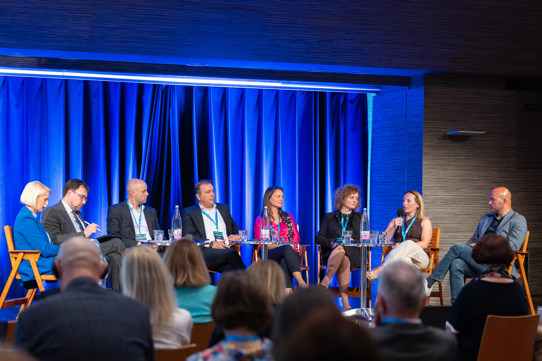
Photo by Žiga Intihar
Organised by FarmaForum, the International Forum of Research-Based Pharmaceutical Companies in Slovenia, the conference brought together representatives of healthcare, the economy, public institutions, academia, patient organisations, and industry to discuss how Slovenia can move from viewing health primarily as a cost to understanding it as a long-term investment with measurable societal and economic benefits.
Opening the conference, Urša Lakner, Vice-President of the Board of FarmaForum, underlined that this year’s theme is not only a slogan, but a shared responsibility of both individuals and systems. She emphasised the need to better connect healthcare, the economy and public policy, and to translate this connection into concrete decisions — from the way innovation is valued to how it reaches patients in practice.
This broader perspective was echoed by Professor Andreja Jaklič from the Faculty of Social Sciences, University of Ljubljana, who stressed that health is increasingly becoming a source of national strength and competitiveness. In a context of geopolitical tensions and growing uncertainty, healthier and more resilient societies are better equipped to build productive, innovative, and sustainable economies. For this reason, health needs to move from the margins of cost discussions to the centre of modern public policy.
Slovenia’s Minister of Health, Dr Valentina Prevolnik Rupel, also addressed the conference and pointed to one of the central dilemmas facing healthcare systems today: medical progress, new medicines, and health technologies are advancing so rapidly that available resources will always require careful prioritisation. The key question is therefore not whether to invest in health, but how to use available resources wisely and strategically.
A forward-looking perspective was provided by Daria Krivonos, CEO of the Copenhagen Institute for Futures Studies, who highlighted that health is becoming a question of societal resilience, economic capacity, and strategic priority-setting. In a world shaped by deep uncertainty, leaders are no longer only asked to predict the future but to make robust decisions despite uncertainty. The choices made today will shape not only public health outcomes but also the adaptability and stability of societies in the years ahead.
The conference also explored how Slovenia can accelerate its transition towards innovation-driven growth. Dr Peter Wostner, economist at the Institute of Macroeconomic Analysis and Development, argued that the time has come for Slovenia to make a decisive structural shift from being primarily an implementer to becoming a creator. In his view, such a transition is not only the most sensible strategy, but also the least risky one.
Professor Dennis Ostwald, CEO of the WifOR Institute, presented health as a multiplier of prosperity. When the links between health and key policy areas such as labour, finance, education, and the environment are properly understood, societies can design more effective measures for resilience and growth. Health investment should therefore be seen not as a narrow sectoral expenditure, but as an enabler of wider benefits for communities, economies, and future generations.
The roundtable discussion further developed this message by focusing on how health extends far beyond the healthcare sector. Speakers from public institutions, academia, healthcare, the payer, the Ministry of Health, the Ministry of Economy, and patient organisations discussed the need to better recognise the indirect costs of disease, including productivity losses, absenteeism, and the broader impact on families, employers, and society.
A recurring theme throughout the discussion was the importance of data. Better use of high-quality data can support earlier diagnosis, more effective care pathways, better management of absenteeism, and more informed policy decisions. Participants also stressed that demographic change will further increase pressure on health and social systems, making long-term planning and smarter investment even more urgent.
The patient perspective was strongly represented by Tanja Španić from Europa Donna Slovenia, who reminded participants that behind every statistic there is a person. She underlined that innovation, diagnostics, digital solutions, and new models of care only create value if they reach people in time. Patients, she argued, must be recognised as active co-creators of healthcare decisions and solutions, not merely as recipients of services.
The discussion concluded with a clear message: Europe and Slovenia need a more strategic approach to health investment. This means looking beyond short-term budget cycles and recognising the broader value that timely access to innovation, prevention, early diagnosis, data-driven decision-making, and patient involvement can bring to society.
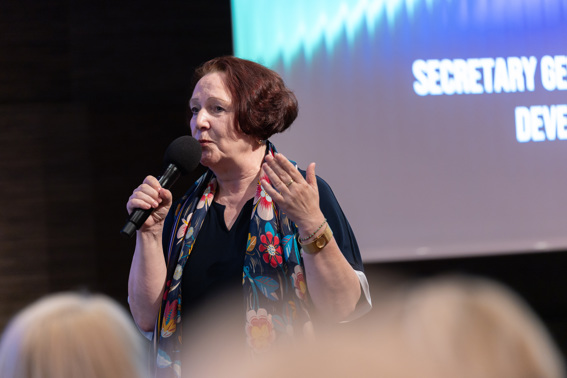
At the close of the conference, Barbara Stegel, Secretary General of FarmaForum, reflected on the role the Value of Innovation conference has played over the past 15 years. It has become a space for constructive dialogue across sectors — a place where complex questions about uncertainty, development, responsibility, and the future of health can be addressed openly.
The conference’s core message was both simple and urgent: health is wealth, but the choice to treat it as such must be made deliberately. Investing in health and healthcare is not only a moral or medical imperative. It is a strategic decision that can strengthen resilience, support economic development, and help build a more sustainable future for all.