Patient safety: EAHP & EFPIA publish joint guidance on single unit barcoding
07.09.26
Manufacturers will add barcodes to single doses of medication, helping hospitals reduce dispensation errors and save lives.
Medication errors are a source of preventable harm in hospitals. Advances in technology can increase patient safety by allowing pharmacists to scan a barcode when dispensing medicines. This ensures the right patient receives the right dose of the right medication.
New guidance published today by The European Association of Hospital Pharmacists (EAHP) and the European Federation of Pharmaceutical Industries & Associations (EFPIA) supports the application of barcodes to each dose of medication. This will be a step forward from applying barcodes to multi-packs of medication.
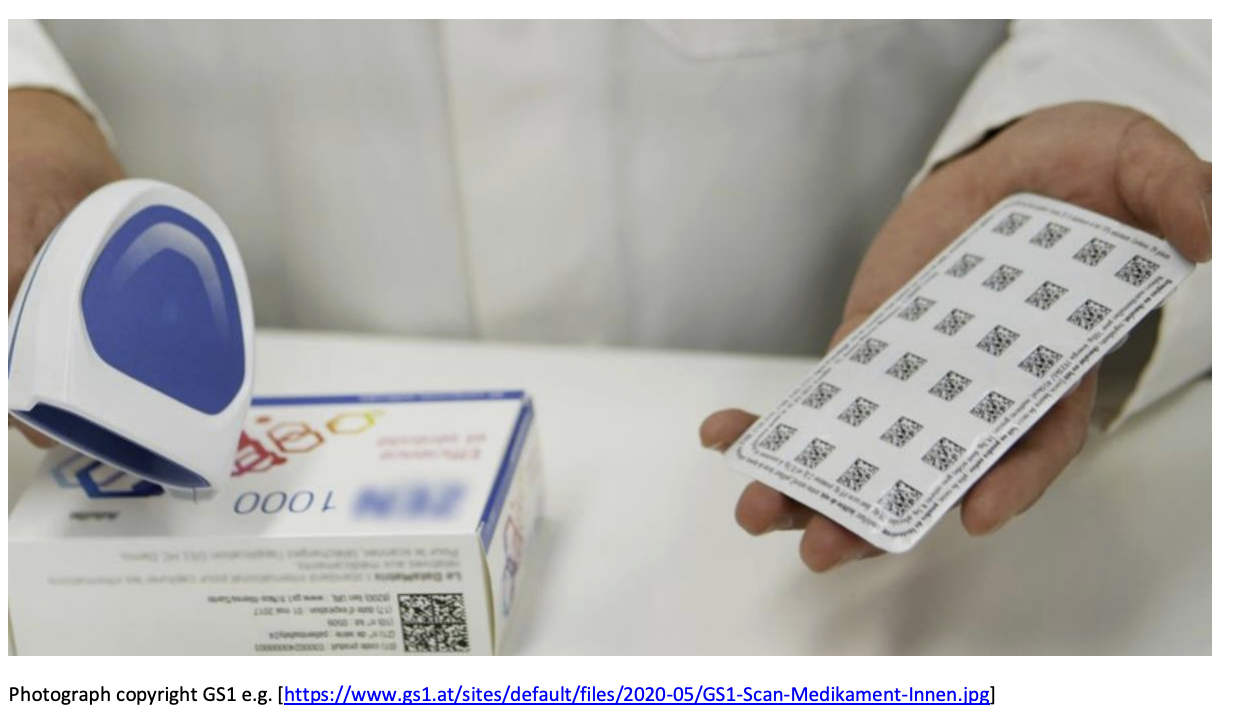
The guidance was developed jointly by EAHP and EFPIA following studies by pharmacists showing that bedside scanning can significantly reduce medication errors by between 30% and 60%. The document sets out a clear, ambitious and feasible implementation plan which will result in a better experience and outcomes for patients.
The new approach will be phased in over a 15-year period to minimise disruption for patients and hospitals while managing additional costs. It applies to all new medicines from 2031 and will extend to existing products over time. The initiative is the result of ongoing efforts by hospital pharmacists and industry to advance patient safety.
“EAHP welcomes the joint guidance on single unit barcoding as an important step forwards in reducing medication errors and adverse events. We thank EFPIA for their collaboration and commitment to the implementation of this important guidance.” Said Nenad Miljković, EAHP President. “EAHP is committed to ensure the effective and suitable use of single unit coding in healthcare systems to guarantee patient safety.
“This joint guidance on single unit barcoding reflects our shared commitment to patient safety. I thank EAHP for their constructive collaboration and acknowledge the efforts of EFPIA member companies in preparing to implement the guidance,” said Nathalie Moll, EFPIA Director General. “Over the next five years, all new medicines will include a barcode on every dose. This will support better use of healthcare resources, including healthcare professionals’ time, and will deliver real advances in patient care.”
Background: Better for patients, better for health services
Errors in dispensing medication in hospitals can lead to increases in illness and, in some cases, death. Administering the wrong dose or wrong medication also leads to longer hospital stays, avoidable readmissions and higher costs. However, the health and economic burden of medication errors can be reduced.
In hospitals, medication multi-packs can contain several doses of medication which are separated into individual doses and dispensed to several patients. At present, while the original pack may carry a barcode, the individual doses often do not. Printing barcodes on each individual vial, blister or pre-filled syringe can reduce error rates by up to 41%[1].
The barcode will contain information on the GTIN product code, batch/lot number, and expiry date. This information will allow pharmacists to check that the patient is receiving the right medicine.
From 2031, all new products will feature barcodes on each single unit dose of medication, while the new approach will be applied to existing medicines on a phased basis. 50% of hospitals in Europe will be able to perform bedside scanning of the code by 2032, increasing to 80% by 2036.
[1] Effect of Bar-Code Technology on the Safety of Medication Administration | New England Journal of Medicine